The complete guide
SEO in London: everything to know before you hire a specialist.
A long-form guide by Shoaib Akhtar, a freelance SEO specialist in London, covering costs, local SEO, technical SEO, AI search and how to choose the right person.
The complete guide
SEO in London: everything to know before you hire a specialist.
Most SEO advice is either too vague to act on or written to sell you something. This guide is the opposite. It explains how SEO really works, what it costs, how long it takes and how to judge any specialist, including me, so you can make a confident decision whether or not we ever work together.
- 01What an SEO specialist does
- 02How SEO works in 2026
- 03Technical SEO checklist
- 04Local SEO in London
- 05Content and keyword strategy
- 06Link building and digital PR
- 07Ecommerce SEO
- 08SEO by industry
- 09SEO pricing in London
- 10Freelancer, agency or in-house
- 11Your first 90 days and KPIs
- 12SEO myths and mistakes
- 13Frequently asked questions
What does an SEO specialist actually do?
Search engine optimisation, or SEO, is the discipline of making a website easier for search engines to find, understand and trust, so that it appears higher when people search for what a business sells or does. An SEO specialist is the person who diagnoses why a site is not ranking, decides what to change, and either makes those changes or briefs the people who will. In a city as crowded as London, the job is part detective work, part strategy and part project management.
The simplest way to understand the role is to split it into three jobs that every successful campaign has to get right at the same time.
1. Make the site easy for search engines to understand
This is technical SEO. It covers how quickly your pages load, whether Google can crawl and index them, how your pages link to each other, whether your site works properly on a phone and whether the underlying code tells search engines what each page is about. A technically sound site is the foundation. If search engines cannot reliably access or interpret your pages, nothing else you do will perform as it should.
2. Make the site worth ranking
This is on-page and content SEO. It means working out what your customers actually type into Google, then creating pages that answer those searches better than anyone else’s. It includes keyword research, page titles, headings, copy, images, internal links and the structure of your service or product pages. The goal is not to stuff phrases into text. It is to match what the searcher wants so well that both the visitor and Google conclude your page is the best result available.
3. Make the site trusted
This is authority building. Search engines look for signs that a business is real, credible and recommended by others: links from reputable websites, press mentions, consistent business listings, genuine reviews and evidence of real expertise. For local businesses it also includes Google Business Profile, because proximity and prominence decide who appears on the map.
What a London SEO specialist does week to week
The day-to-day work varies by client, but a typical month for a specialist working with a London business includes some combination of the following:
- Reviewing Google Search Console and analytics to spot ranking gains, drops and new opportunities
- Researching keywords and search intent for new or underperforming pages
- Writing or editing page titles, headings, copy and internal links
- Briefing and reviewing content from writers or subject-matter experts
- Fixing technical issues such as broken links, redirect chains, indexation problems and slow pages
- Managing and improving the Google Business Profile, citations and review process
- Earning links through outreach, digital PR and useful resources
- Tracking competitors and responding to what they publish
- Reporting on what changed, what it achieved and what comes next
What an SEO specialist cannot do
No honest specialist can guarantee a number one ranking, because Google’s results depend on hundreds of factors, many of them outside anyone’s control, and the results change constantly. A specialist also cannot make a poor product, a slow-moving sales process or an unclear offer convert. SEO brings the right people to your door. What happens when they arrive is still down to your business. The best specialists say this plainly at the start, because it protects you from disappointment and protects them from over-promising.
Why London is a different kind of search market
London is the most competitive local search market in the UK. Almost every sector has dozens or hundreds of businesses competing for the same searches, often within a few miles of each other. Paid advertising costs are high, which makes organic visibility proportionally more valuable. Customers search on the move, across dozens of neighbourhoods and boroughs, and expect results that are genuinely near them. Many searches are also national or international in intent, so a London business may need to compete locally and nationally at the same time.
That mix is what makes London SEO distinctive. A strategy that works for a village plumber will not work for a Mayfair solicitor, a Shoreditch restaurant or an ecommerce brand shipping across the UK. A good London SEO specialist understands which battles are worth fighting, which are not and how to find the gaps competitors have left open.
Specialist, consultant or agency? The terms overlap. An SEO specialist usually does hands-on work, a consultant tends to advise and direct, and an agency is a team that delivers a broader package. Many independent specialists, including me, do both the thinking and the doing. What matters is who will actually be working on your site each month, which is covered in the section on choosing between a freelancer, an agency and an in-house hire.
How SEO works in 2026
Understanding the basics of how search engines work makes every SEO decision easier to judge. Whether you hire me or anyone else, you should be able to follow the logic of what is being done and why.
Crawling, indexing and ranking
Search engines work in three broad stages. First they crawl the web, following links from page to page to discover content. Then they index what they find, storing and analysing each page so they understand what it is about. Finally, when someone searches, they rank the indexed pages, choosing and ordering the results they think will best satisfy that particular person at that particular moment.
Problems can occur at every stage. A page that cannot be crawled never gets discovered. A page that is crawled but not indexed cannot appear in results. A page that is indexed but weak, thin or untrusted will sit below competitors. Diagnosing which stage is failing is the first task in any SEO audit.
What search engines are really trying to do
Google’s stated aim is to show the most helpful, reliable results for each search. In practice that means weighing three broad questions. Is this page relevant to what the person asked? Is it good, meaning accurate, complete, well presented and easy to use? And is the site trustworthy, meaning is there evidence of genuine experience, expertise and reputation behind it? Almost every legitimate SEO tactic is a way of improving the answer to one of those three questions.
Search intent decides everything
The most common reason a page fails to rank is that it does not match the intent behind the search. People search for four broad reasons. They want to know something (‘how does SEO work’), find a specific site, compare options (‘best SEO consultant London’) or act (‘hire SEO specialist London’, ‘book SEO audit’). A service page will rarely rank for a purely informational search, and a blog post will rarely win a strong buying search. Matching the right page type to the right intent is one of the highest-leverage skills in SEO.
AI Overviews, AI assistants and the rise of GEO
The biggest change in search over the last few years is the arrival of AI-generated answers. Google now shows AI Overviews for many searches, and people increasingly ask tools such as ChatGPT and Perplexity questions they would once have typed into a search box. For some informational searches, these answers can reduce the number of people who click through to a website.
This has created a new discipline, often called generative engine optimisation or GEO. In practice, much of it is simply good SEO applied with care: publishing clear, accurate, well-structured content from a recognisable and credible source, using structured data so machines can understand your business, earning mentions and links from trusted sites and answering real questions directly. The businesses most likely to be cited by AI tools are the same ones that already deserve to rank well in traditional search.
The practical consequence is that the valuable clicks remain. Searches with commercial intent, such as comparing providers, checking prices and choosing a local business, still send people to websites, and they are the ones that turn into customers. That is why my approach prioritises the searches closest to a purchase rather than chasing traffic for its own sake.
E-E-A-T: experience, expertise, authoritativeness and trust
Google’s quality guidelines describe the qualities it wants to reward as experience, expertise, authoritativeness and trustworthiness, usually shortened to E-E-A-T. It is not a single ranking factor you can switch on. It is a way of describing what a reliable site looks like. In practice you demonstrate it by showing who is behind the business, publishing content written by people who genuinely know the subject, displaying real reviews and case studies, being transparent about prices and processes and earning recognition from other trusted sources. Placeholder authors, stock photography and generic copy do the opposite.
Technical SEO: the checklist every London site needs
Technical SEO is the infrastructure beneath your content. It rarely makes headlines, but it is often where the fastest and most dramatic improvements are found, because technical faults can silently suppress an otherwise strong site. This is the checklist I work through on every audit. You can see how I apply it on the technical SEO service page.
Crawlability and indexation
Search engines can only rank pages they can reach and are allowed to index. I check that your robots.txt file is not accidentally blocking important areas, that your XML sitemap lists the right pages and only the right pages, that no valuable pages carry a noindex tag by mistake and that low-value pages such as internal search results, filter combinations and thin archives are not wasting crawl budget. Index bloat, where search engines index thousands of near-useless URLs, is surprisingly common on WordPress and ecommerce sites.
Site architecture and internal linking
A clear structure helps both visitors and search engines understand which pages matter most. Important pages should be reachable within a few clicks of the homepage, grouped logically and linked to from relevant content using descriptive anchor text. Internal links pass authority around your site, so they are one of the cheapest and most powerful ways to lift the pages that generate revenue.
Speed and Core Web Vitals
Page experience matters to visitors and to rankings. Google measures it through Core Web Vitals, which assess loading performance, responsiveness and visual stability. The widely used targets are a Largest Contentful Paint of 2.5 seconds or less, an Interaction to Next Paint of 200 milliseconds or less and a Cumulative Layout Shift of 0.1 or less. Improvements usually come from compressing and properly sizing images, reducing unused JavaScript and CSS, using good hosting and caching and avoiding layout jumps caused by late-loading elements.
Mobile-first usability
Google predominantly uses the mobile version of a page for indexing and ranking. In London, where a large share of searches happen on phones between meetings, on public transport or on the pavement outside a shop, a clumsy mobile experience costs enquiries as well as rankings. I test tap targets, text size, menu behaviour, forms and click-to-call buttons on real devices.
Structured data
Structured data, usually added as schema markup, tells search engines exactly what is on a page: that this is a business with this address and these opening hours, that this is a service, that these are frequently asked questions, that this is a product with this price and these reviews. It does not guarantee special treatment in results, but it removes ambiguity and can make you eligible for richer listings. It also helps AI systems understand your business accurately.
Redirects, errors and duplicate content
Broken links, long redirect chains, soft 404 errors and duplicate versions of the same page all dilute your authority and confuse search engines. I fix them at source, consolidate duplicates with canonical tags or redirects and make sure that http, https, www and non-www versions resolve to a single preferred address.
JavaScript rendering
Sites built with modern JavaScript frameworks can hide content from search engines if they are not set up carefully. I check that important text, links and metadata are present in the rendered page and not only after scripts run, and that nothing critical depends on user interaction to appear.
Site migrations
Redesigns, new platforms and domain changes are the moments when businesses most often lose years of hard-won rankings. A safe migration needs a complete URL inventory, a precise redirect map, pre-launch testing, careful launch timing and weeks of monitoring afterwards. If you are planning one, involve an SEO specialist before the design is signed off, not after the site has launched.
Not sure where your site stands? A full SEO audit covers every point above and ends with a prioritised action plan, so you know exactly what to fix first.
Local SEO in London: winning the map pack borough by borough
For any business that serves customers in a particular area, local SEO is often the fastest route to new enquiries. When someone searches for a service and Google detects local intent, it shows a map with three businesses, known as the local pack, above the ordinary results. Those three slots capture a disproportionate share of clicks, calls and visits. Our dedicated local SEO service is built around winning them.
How Google decides who appears locally
Google has said that local results are based mainly on three factors. Relevance is how well your profile matches what the person searched for. Distance is how far your business is from the searcher, or from the area named in the search. Prominence is how well known and well regarded your business is, based on reviews, links, mentions and your overall online presence. You cannot change where your premises are, but you can influence relevance and prominence a great deal, and that is where local SEO work concentrates.
Optimising your Google Business Profile
Your Google Business Profile is the single most important local asset. A fully optimised profile includes:
- The most accurate primary category, plus relevant secondary categories, because category choice is one of the strongest relevance signals
- Your exact business name as it appears in real life, without keyword stuffing, which can result in suspension
- A complete and consistent address, phone number, website link and accurate opening hours, including bank holidays
- A full list of services or products with clear descriptions
- High-quality, genuine photos of your premises, team, work and products, added regularly
- Regular posts about offers, news and events
- Answers to common questions, written before customers ask them
- Booking, quote or appointment links where relevant
Reviews: earning them honestly
Reviews influence both rankings and conversion. The best approach is simple and ethical: ask every satisfied customer at the moment they are happiest, make it easy with a direct link, respond to every review politely and specifically and handle criticism calmly and publicly. Never buy reviews, offer incentives that breach platform rules or write reviews on behalf of customers. Fake reviews are against platform policies and consumer law in the UK, and they put your reputation at risk.
Citations and consistency
A citation is any mention of your business name, address and phone number on another website. Consistency across the places that matter reinforces trust. Beyond the major platforms such as Bing Places and Apple Business Connect, the right directories depend on your sector. They might include Yell, Yelp, Checkatrade, TrustATrader, professional bodies, local chambers of commerce, business improvement districts and industry-specific listings. Quality and accuracy matter far more than volume.
Location pages for London boroughs and neighbourhoods
If you serve customers across several parts of London, dedicated location pages can help you appear for searches such as ‘accountant in Islington’ or ‘electrician in Croydon’. The danger is creating thin, near-identical pages that only swap the place name. Google calls these doorway pages and they can do more harm than good. A good location page contains genuinely useful local detail: real projects or clients in the area, local landmarks and transport links, area-specific questions, testimonials from local customers and a clear explanation of how you serve that part of London.
London has 32 boroughs plus the City of London, and the search behaviour in each differs. The main areas businesses commonly want to target include:
- Central: City of London, Westminster, Camden, Islington, Kensington and Chelsea, Southwark, Lambeth, Tower Hamlets
- North: Barnet, Enfield, Haringey, Harrow, Waltham Forest
- East: Barking and Dagenham, Hackney, Havering, Newham, Redbridge
- South: Bexley, Bromley, Croydon, Greenwich, Lewisham, Merton, Sutton, Wandsworth
- West: Brent, Ealing, Hammersmith and Fulham, Hillingdon, Hounslow, Kingston upon Thames, Richmond upon Thames
Neighbourhood names such as Shoreditch, Canary Wharf, Clapham, Notting Hill, King’s Cross and Brixton often carry stronger local intent than borough names, so I research which place names your customers actually use before deciding where to focus.
Service-area businesses
If you travel to customers rather than welcoming them at a shop, such as a plumber, a locksmith or a mobile therapist, you can still rank locally. You define the areas you serve in your profile, hide your home address if you do not receive visitors there and build location-relevant content and links. Google’s guidelines are strict about eligibility, so setting this up correctly from the beginning avoids suspensions later.
Local links and community signals
Links from locally relevant websites are valuable prominence signals. They can come from local press, community groups, charities you support, business improvement districts, neighbouring complementary businesses, event sponsorships, university partnerships or local awards. These are also the kind of links that bring real referral traffic, not just rankings.
Measuring local SEO
Rankings in the map pack vary from street to street, so one position figure tells you very little. I track visibility across a grid of locations, alongside the numbers that matter commercially: calls, direction requests, website clicks, form submissions and bookings from your Google Business Profile and website.
Content and keyword strategy that attracts buyers, not browsers
Content is how you tell search engines, and customers, what you do and why you are worth choosing. Done well, it compounds. A page written today can keep generating enquiries for years. Done badly, it clutters your site with pages nobody reads.
Start with keyword research that reflects real buying behaviour
Keyword research is not about finding the highest-volume phrase. It is about understanding how your customers describe their problem, what they type at each stage of deciding and which searches are closest to a purchase. I group keywords by intent and commercial value, check what currently ranks to see what Google believes searchers want and look for gaps where competitors are weak.
For a London business there is an extra layer. Searches often include a place name, a borough or a phrase like ‘near me’, and the same service can be described in several ways. A dental clinic may need to cover ‘emergency dentist’, ‘teeth whitening’ and ‘invisible braces’ across a handful of neighbourhoods. Mapping all of that to the right pages is a core part of the strategy.
Build topic clusters, not isolated pages
Search engines reward sites that demonstrate depth on a subject. Instead of publishing unconnected articles, I plan a central page for each core service and a cluster of supporting content that answers related questions, comparisons, pricing queries and common objections, all linked together. Each piece strengthens the others, and the cluster as a whole signals genuine expertise.
Write for people first, then refine for search
Good SEO content is clear, specific and useful. It answers the question in the first few lines, then goes deeper. It uses the language your customers use, includes real examples, prices or timelines where possible and makes the next step obvious. Once the substance is right, I optimise the title, headings, internal links, images and structured data. Publishing volume for its own sake does not help. One excellent page usually outperforms ten thin ones.
Show real experience
Because Google prioritises content that demonstrates first-hand experience, I help clients include what only they can say: photographs of real work, case studies with real numbers, quotes from named experts, behind-the-scenes explanations and honest comparisons. These are also the details that persuade human visitors, and that AI tools tend to cite.
Refresh what you already have
Often the best return comes from improving existing pages rather than writing new ones. Pages that sit at positions four to fifteen can frequently be pushed onto page one by expanding thin sections, updating out-of-date information, improving internal links and sharpening the title. Content refreshes are a regular part of my monthly work.
Content formats that work for service businesses
- Detailed service pages that explain who it is for, what is included, how it works and what it costs
- Location pages with genuine local substance
- Comparison and ‘how to choose’ guides that capture buyers while they research
- Pricing guides that answer the question every customer asks first
- Case studies and results pages that provide proof
- FAQ sections that target question-based searches and conversational queries
You can explore how this fits into a full engagement on the content and link building page.
Link building and digital PR: earning authority the right way
Links from other websites remain one of the strongest signals of trust and authority. When a reputable site links to yours, it works like a recommendation. Search engines count those recommendations, which is why businesses with strong, relevant link profiles tend to outrank equally good sites that have none. It is also why link building is the area where most SEO horror stories begin.
Why quality beats quantity
A handful of links from respected, relevant sites will do more for you than hundreds from irrelevant directories, link farms or networks of sites that exist only to sell links. Google’s spam policies specifically target link schemes, and sites that buy or manufacture links risk losing rankings or receiving manual penalties. Recovering from that damage can take months of clean-up. I only use methods that I would be comfortable explaining to you, and to Google, in full.
Methods that work and last
- Digital PR: creating newsworthy data, commentary or stories that journalists and bloggers want to cite
- Linkable assets: genuinely useful tools, guides, research and resources that other sites reference naturally
- Relationship-led outreach: building real connections with editors, industry bodies, suppliers and complementary businesses
- Expert contributions: commentary, interviews, speaking and guest articles on respected industry sites
- Reclaiming unlinked mentions: finding places that already talk about you and asking for a link
- Local and community links: partnerships, sponsorships, awards and associations in the areas you serve
- Broken link and resource opportunities: offering a better replacement where a linked page no longer exists
Cleaning up risky links
If your site has a history of low-quality link building, a link audit identifies harmful patterns. In most cases the right response is to focus on earning better links rather than disavowing everything. Disavowing is reserved for clear cases of manipulative links that could trigger a manual action.
What to ask any link builder
Ask where the links will come from, whether you will see every placement, whether the sites are real businesses with real audiences and what happens if a link disappears. Be wary of anyone who promises a fixed number of links per month without describing the sites, or who refuses to share examples.
Ecommerce SEO: turning category pages into revenue
Online stores face a different set of challenges from service businesses. They have large numbers of near-identical pages, complex navigation, products that come and go and a customer journey that rewards speed and trust. The opportunity is correspondingly large, because ecommerce shoppers are often searching with clear intent to buy. The ecommerce SEO service is built around these specifics.
Category pages come first
For most stores, category pages capture the highest-value searches, such as ‘women’s running shoes’ or ‘standing desks’. Yet they are often the most neglected pages, containing a grid of products and no useful content. Strong category pages combine clear headings, helpful introductory copy, buying advice, sensible filters, internal links to related categories and structured data, without burying the products shoppers came for.
Product pages at scale
With thousands of products, writing everything by hand is unrealistic. The answer is well-designed templates that produce unique, descriptive titles, meta descriptions and on-page content from product data, combined with extra attention on best sellers and high-margin items. Reviews, clear pricing, availability, delivery information and product schema all help both rankings and conversion.
Faceted navigation and duplicate content
Filters for size, colour, brand and price can generate millions of near-duplicate URLs. Left uncontrolled, they waste crawl budget and dilute rankings. I decide which filter combinations deserve their own indexable pages, because people genuinely search for them, and which should be blocked or consolidated.
Handling out-of-stock and discontinued products
What you do with a product page when stock runs out matters. Temporary stock-outs usually call for keeping the page live with clear messaging and alternatives. Permanent removals call for a redirect to the closest relevant product or category, not a dead end.
Content that supports sales
Buying guides, comparison articles, size and fit advice and care instructions capture shoppers in the research phase and feed them into your categories. They also give your brand the topical depth that search engines and AI tools look for.
Platform considerations
Shopify, WooCommerce, Magento, BigCommerce and custom builds each have their own quirks, from URL structures to default duplicate content to how they handle structured data. I tailor recommendations to your platform so developers can implement them without fighting the system.
SEO for London industries: what changes from sector to sector
The fundamentals of SEO are universal, but the priorities shift depending on how customers in your sector search and decide. Here is how I approach some of the sectors London businesses most often ask about.
Law, finance and professional services
Trust is everything. Clients choose advisers based on credibility, so profiles of named experts, qualifications, regulatory information, case studies and reviews carry great weight. Searches are often high value, which means fierce competition and strict rules about what you can claim. Practice-area pages, location pages for the City and surrounding boroughs and thought leadership that demonstrates expertise form the core.
Healthcare, dental and wellbeing clinics
Patients search by treatment and by location, and they rely heavily on reviews. Local SEO and treatment pages carry most of the weight. Content must be accurate and responsibly written, because health topics fall under Google’s stricter quality standards. Clear information about practitioners, prices and booking dramatically improves conversion.
Restaurants, cafes and hospitality
Discovery happens on maps, reviews and social platforms as much as on websites. A well-run Google Business Profile with excellent photos, accurate menus and opening hours, and a steady stream of reviews often matters more than the website itself. A fast, mobile-friendly site with an easy booking route and local content about events, neighbourhood and menus completes the picture.
Trades and home services
Customers search urgently and locally, often by phone. Service-area setups, strong reviews, clear service pages for each trade and borough, and prominent click-to-call buttons win jobs. Photos of real work and transparent pricing guidance set trusted businesses apart from anonymous lead-generation sites.
Property, lettings and estate agency
Property searches are hyper-local and depend on neighbourhood pages, area guides, market commentary and fresh listings. Competing with the big portals requires focusing on the areas, property types and services where a local agent can genuinely offer more value, such as lettings management, local market knowledge and valuations.
Retail and ecommerce
Independent London retailers often benefit from combining local SEO for their shop with strong category pages and content for their online store. Large catalogues need careful technical SEO, while niche brands can win by publishing the expert advice that big marketplaces do not.
SaaS, technology and B2B
Buyers research for weeks and involve several decision makers. Strategy focuses on problem-led content, comparison pages, integration pages, case studies and thought leadership, with a strong emphasis on conversion paths such as demos and trials. Long sales cycles mean measuring influence and assisted conversions, not only last-click sales.
Education, training and charities
Seasonal demand, course-level pages, accreditation information and trust signals drive results for training providers. For charities, strong storytelling, donation pathways and the Google Ad Grants programme can combine with SEO to support campaigns.
If your sector is not on this list, that does not mean SEO will not work for you. It means we start by understanding how your customers search before we plan anything. The free SEO review is the quickest way to find out what is possible in your market.
How much does SEO cost in London?
It is the first question everyone asks and the one many providers avoid answering. Here is a straight explanation of how SEO is priced in London, what drives the cost and what you should expect to pay for different levels of service.
Typical price ranges
Published pricing guides for the London market give a useful picture, though every figure is indicative and every business is different. Freelance SEO specialists are commonly quoted at roughly £75 to £150 an hour or £500 to £2,500 a month, while some Central London guides place experienced freelancers higher, at £1,500 to £4,000 a month. Agencies commonly charge from around £3,000 up to £15,000 or more a month. Some providers advertise entry-level local packages from a few hundred pounds a month, which typically reflect a much smaller scope.
| Service | Typical London range | Notes |
|---|---|---|
| Technical SEO audit | £400 – £1,200+ | Depends on site size and complexity |
| Keyword research and strategy | £300 – £800+ | One-off project or part of a retainer |
| Freelance monthly retainer | £500 – £2,500+ | Higher in competitive sectors |
| Agency monthly retainer | £3,000 – £15,000+ | Larger teams and broader scope |
| Hourly consultancy | £40 – £150 | Varies with seniority |
These ranges come from publicly available London pricing guides and provider pages and are included to help you benchmark, not as a quote. [Add your own prices or ranges here.]
What drives the price
- Competition: ranking for ‘personal injury solicitor London’ takes far more work than ranking for a niche local service
- Site size and condition: a clean ten-page site and a sprawling ecommerce store are very different projects
- Goals: local visibility, national rankings and international growth need different levels of investment
- Scope: whether the retainer covers technical work, content creation, link building, local SEO and reporting
- Starting point: a site recovering from penalties or a failed migration needs more than a healthy one
- Speed: faster targets need more resource in parallel
Retainer, project or hourly?
Retainers suit most businesses because SEO compounds over time, and continuity delivers the best results. Projects such as audits, migrations or a one-time local SEO overhaul suit businesses with clear, bounded needs or an in-house team to implement. Hourly consultancy works for specific questions or second opinions. I will recommend the structure that matches your goals, not the one that earns me the most.
Is SEO worth the money?
SEO is an investment that builds an asset. Unlike paid ads, which stop the moment you stop paying, rankings and content keep working. The right question is not ‘what does it cost?’ but ‘what is an extra customer worth to us?’ If an average new client is worth £1,000 and a campaign reliably brings you several more each month, the economics are usually compelling. I will always help you work through that arithmetic before you commit.
Warning signs on price
Be careful of very cheap packages that promise page-one rankings, of prices that are vague about what is included and of anyone who will not explain how the budget is spent. Equally, a high price is no guarantee of quality. Ask for a clear scope, clear deliverables and clear reporting.
Freelance SEO specialist, agency or in-house hire?
There is no universally right answer. Each model suits different businesses, budgets and goals. The key is understanding the trade-offs honestly, which is what this section sets out.
| Factor | Freelance specialist | Agency | In-house |
|---|---|---|---|
| Cost | Usually lower than an agency | Higher, covers overheads and a team | Salary plus tools, training and management |
| Access to the expert | Direct, the person doing the work | Often via an account manager | Direct but a single perspective |
| Breadth of skills | Deep in SEO, specialist partners for extras | Wide: design, PPC, PR, development | Varies with the hire |
| Flexibility | High: scale up or down | Contract-based | Fixed headcount |
| Best for | SMEs and growing brands wanting senior expertise | Large, multi-channel campaigns | Large sites with constant SEO workload |
When a freelancer is the better choice
If you want a senior person, not a junior team, directly accountable for your results, a freelancer is often the strongest fit. There are no layers between you and the work, communication is faster and the budget goes into doing SEO, not sustaining an office. That said, a freelancer is one person, so capacity is limited. A good one is honest about what they can and cannot take on and brings in trusted specialists when needed.
When an agency makes sense
If you need a coordinated effort across SEO, paid media, design, development and PR, or you manage a very large site with a heavy workload, an agency’s breadth can be worth the premium. Just ask who will actually do the work on your account.
When to hire in-house
Large businesses with a permanent SEO workload often benefit from an in-house hire. Many then use a freelance specialist for strategy, audits and second opinions, which is a combination that works particularly well.
How to choose any SEO specialist
- Check real evidence. Ask for case studies with specifics: starting points, what was done, what changed and over what period.
- Talk to references. A confident specialist will happily connect you with previous clients.
- Ask how they would approach your site. A good specialist asks questions first. A poor one pitches a package.
- Check the reporting. You should receive plain-English updates linked to leads and revenue, not a wall of metrics.
- Understand the contract. Look for sensible notice periods and no hidden lock-ins. [Confirm your own contract terms here.]
- Ensure you own your data. You should always retain access to your analytics, Search Console and content.
Red flags to walk away from
- Guaranteed rankings or guaranteed first-page results
- Promises of results in a few weeks, particularly under six weeks
- Secret or proprietary methods they will not explain
- Pricing based on cheap bulk link packages
- No access to your analytics or Search Console
- Reports that list activity but never mention leads, sales or revenue
- Pressure to sign long contracts before any work has been shown
AI search and GEO: getting your business cited by Google, ChatGPT and Perplexity
For most of SEO’s history, the goal was simple: rank on page one and earn the click. That goal still matters, but it is no longer the whole picture. Today your potential customers may ask an AI assistant to recommend a London accountant, read a Google AI Overview summarising the options or type a conventional search and scroll the results. A modern strategy has to cover all three.
How AI answers choose their sources
AI search tools generally work by retrieving relevant pages from the web, or from their own indexes, and then summarising what those pages say. They tend to draw on sources that are clear, specific, well-structured and credible, and they frequently cite the pages they use. Nobody outside these companies knows the exact selection rules, and anyone who claims to have cracked them is overselling. What we can say with confidence is that the same qualities that help a page rank in traditional search, such as relevance, clarity, authority and trust, also make it more likely to be used.
Practical steps that improve AI visibility
- Answer questions directly. Put a concise, self-contained answer near the top of the relevant section, then expand. Short, quotable passages are easier for both search engines and AI tools to lift accurately.
- Use clear structure. Descriptive headings, short paragraphs, lists and tables make content easier to parse. Question-style headings that mirror how people actually ask are particularly effective.
- Make your business unambiguous. Use the same business name, description, address, phone number and service descriptions everywhere, and add organisation and local business structured data so machines know exactly who you are.
- Show real expertise. Named authors, credentials, original data, first-hand examples and case studies give AI systems and humans a reason to trust you over generic content.
- Earn mentions on reputable sites. Press coverage, industry directories, reviews and links from respected publications strengthen the picture of your brand across the web, which is where AI models learn who is credible.
- Keep important content crawlable. Make sure your robots.txt and security settings are not accidentally blocking the crawlers you want to be seen by. Whether to allow or block specific AI crawlers is a business decision I will help you make.
- Keep content fresh. Update prices, services, dates and statistics. Out-of-date pages are less likely to be trusted or cited.
- Strengthen your Google Business Profile. For local queries, accurate profiles, strong reviews and complete service information feed directly into the answers people see.
What to be careful about
Be wary of anyone selling secret AI ranking tricks, hidden text aimed at language models or mass-produced AI content published to game the system. These approaches carry the same risks as old-fashioned spam. Some site owners also add an llms.txt file in the hope of influencing AI tools, but at the time of writing there is little reliable evidence that it changes results, so it is not a priority.
How to measure it
AI visibility is harder to measure than rankings, but not impossible. I track referral traffic from AI tools in your analytics, test a consistent set of realistic customer prompts across the main assistants and record whether and how your business is mentioned, and monitor branded search demand, which tends to rise when more people hear about you. These are directional signals and I will present them honestly as such.
The bottom line: AI has not replaced SEO. It has raised the bar for clarity, credibility and authority, which is exactly what a well-run SEO programme builds.
SEO for WordPress, Shopify, Wix, Webflow and custom sites
The platform you build on shapes what is easy, what is awkward and what is impossible in SEO. Here is what I look for on the most common ones.
WordPress and WooCommerce
WordPress is flexible and well suited to SEO, but it is only as good as its setup. I check for plugin bloat that slows the site, a well-configured SEO plugin, sensible permalinks, clean category and tag structures, image optimisation and caching, and I make sure that auto-generated archive pages are not flooding the index. WooCommerce adds product, attribute and filter complexity that needs careful handling.
Shopify
Shopify is fast to launch and generally solid on technical basics, but has some structural quirks. Products can be reached through multiple URL paths, which can create duplicate content unless canonical tags are handled correctly. Collections, tags and filters need attention, and a large app stack can slow pages down. I work within its constraints and use its flexibility where it exists.
Wix and Squarespace
Both have improved significantly and are perfectly capable of ranking for local and small-business searches. The limitations are mostly around technical control, advanced structured data and fine-tuning site speed. If those limits are holding back a growing business, I will say so and discuss the options.
Webflow
Webflow produces clean code and gives good control over on-page elements, but needs deliberate setup for redirects, structured data and large content collections. It is an excellent choice for design-led sites when SEO is considered from the start.
Magento, BigCommerce and enterprise platforms
Large catalogues bring serious crawl, speed and duplication challenges. Success depends on careful template planning, faceted navigation control, performance work and close collaboration with developers.
Custom and headless builds
Modern frameworks can deliver excellent speed and flexibility, but they must be built so that search engines receive fully rendered content, clean URLs and proper metadata. Involving SEO at the planning stage prevents costly rework.
How to measure SEO return on investment
SEO should be judged like any other investment: what did it cost and what did it return? Here is a straightforward way to think about it, with a worked example so the arithmetic is clear.
The simple formula
Organic revenue minus the cost of SEO, divided by the cost of SEO, gives you return on investment. To calculate organic revenue you need to know how many enquiries or sales come from organic search, how many of those enquiries become customers and what a typical customer is worth.
A worked example (illustrative figures)
Imagine a London services business where an average new customer is worth £1,200 and about one in four enquiries becomes a customer. Before SEO, organic search brings 20 enquiries a month. After several months of work it brings 60. That is 40 extra enquiries, which at a one-in-four close rate is 10 extra customers, or £12,000 of additional monthly revenue. If the monthly SEO investment is a fraction of that, the return is substantial, and because rankings persist, those results continue without needing to be bought again each month.
These figures are purely illustrative and not a promise or a prediction. Your numbers will differ, which is why the first step of any engagement is to establish your real conversion rates and customer values so that goals are grounded in reality.
Tracking it properly
- Set up conversion tracking for forms, calls, bookings and purchases in Google Analytics 4
- Use call tracking where phone enquiries matter, so organic calls are not invisible
- Capture the source in your CRM so that closed deals can be traced back to the channel that started them
- Separate branded from non-branded search to see whether you are winning new customers or merely being found by existing ones
- Track assisted conversions because customers often visit several times, through several channels, before enquiring
Allow for time lag
SEO costs arrive immediately, but returns build gradually. A fair assessment looks at the trend over six to twelve months, not a single month, and compares it with the alternative of paying for the same traffic through advertising.
A 20-point SEO checklist you can run yourself today
You do not need to be a specialist to spot the most common problems. Work through this list on your own site. Every ‘no’ is a potential opportunity, and if you find several, a full SEO audit will show you how much they are costing you.
- Search Google for site:yourdomain.co.uk. Do the number and type of results look right, or are there far too many or far too few?
- Check Google Search Console for coverage and indexing warnings, manual actions and security issues.
- Confirm that your site loads securely over HTTPS and that every version of your address redirects to one preferred version.
- Open your site on a phone. Can you read it, tap everything and reach the phone number or enquiry form in a couple of taps?
- Run your key pages through Google’s PageSpeed Insights and note any failing Core Web Vitals.
- Check that every important page has a unique, descriptive title tag of roughly 50 to 60 characters that includes its main keyword naturally.
- Check that each page has a compelling meta description that encourages the click.
- Make sure each page has a single clear H1 heading, followed by logical subheadings.
- Look for broken links and error pages and fix or redirect them.
- Identify thin or duplicate pages that add nothing and could be improved or merged.
- Confirm that your XML sitemap exists, is submitted to Search Console and contains only pages you want indexed.
- Check your robots.txt file is not blocking anything important.
- Check that your key service pages are linked to from your navigation and from related content.
- Ensure that you do not have several pages competing for the same keyword.
- Verify that your Google Business Profile is claimed, complete and accurate, with the right categories and services.
- Check your name, address and phone number are identical across your website, profile and main directories.
- Look at your reviews. Are they recent, plentiful and answered?
- Test your key pages with Google’s Rich Results Test to see whether structured data is present and valid.
- Review who links to you and whether any links look unnatural or spammy.
- Walk through your own enquiry journey from search to submitted form. Is anything confusing, slow or broken?
If you tick most of these boxes, your foundations are healthy and growth will come from content and authority. If you find a handful of issues, you have quick wins. If you find many, you are almost certainly leaving enquiries on the table, and I would be glad to take a look.
12 questions to ask any SEO specialist before you hire them
The first conversation tells you a great deal. Whether you are speaking to me, another freelancer or an agency, these questions separate people who understand your business from people reading a sales script.
- Who will actually work on my account? You want a name and a role, not a department.
- What do you need to know about my business before recommending anything? The best specialists ask about customers, margins, seasonality and goals before they mention tactics.
- How will you measure success? The answer should centre on enquiries, sales and revenue, with rankings and traffic as supporting signals.
- What will you do in the first 90 days? Expect a clear sequence of audit, fixes and priorities, not a vague promise of ‘ongoing optimisation’.
- Can you show me similar work and put me in touch with a client? Real experience should be easy to evidence.
- What would you do differently from my current provider? A good answer is specific and fair, not a blanket criticism.
- How do you build links? You should hear about earning links through content, PR and relationships, and nothing about guaranteed numbers or bought placements.
- What can go wrong, and how do you manage the risk? Honest specialists talk about algorithm changes, slow starts and migrations without flinching.
- What do you need from me and my team? SEO works best as a partnership, with timely access, approvals and content input.
- How often will we speak, and what will your reports include? Ask to see a sample report.
- Who owns the accounts, content and data? The answer should always be you.
- What happens if we part ways? A confident provider has a clean exit with no penalty and no hostage-taking.
I am happy to answer every one of these on a free call, and I will be just as direct about the things I would not recommend. If you would like to test me, get in touch.
SEO glossary: the jargon in plain English
SEO is full of acronyms and technical terms. Here are the ones you are most likely to meet when working with any specialist.
- Anchor text: the clickable words in a link, which give search engines context about the page being linked to.
- Backlink: a link from another website to yours, acting as a vote of confidence.
- Canonical tag: a piece of code that tells search engines which version of a page is the preferred one when similar versions exist.
- Crawl budget: the amount of attention a search engine is willing to give your site. It matters most for large sites.
- Click-through rate (CTR): the percentage of people who see your listing and click on it.
- Core Web Vitals: Google’s measures of loading speed, responsiveness and visual stability.
- E-E-A-T: experience, expertise, authoritativeness and trustworthiness, the qualities Google’s quality guidelines describe as signs of a reliable source.
- Featured snippet: a highlighted answer shown at the top of some search results.
- GEO (generative engine optimisation): improving your chances of being cited in AI-generated answers.
- Google Business Profile: your free listing on Google Search and Maps, central to local SEO.
- Indexation: the process of a search engine adding a page to its database so it can appear in results.
- Keyword cannibalisation: when several pages on your site compete for the same search, weakening them all.
- Local pack: the map and short list of local businesses shown for local searches.
- Meta description: the short summary beneath a result title, which influences whether people click.
- NAP: name, address and phone number, the core details that must be consistent across the web for local SEO.
- Noindex: an instruction telling search engines not to include a page in their results.
- Organic traffic: visitors who arrive through unpaid search results.
- Schema markup: structured data added to a page to help search engines understand its content.
- SERP: search engine results page, the page of results you see after a search.
- Search intent: the underlying goal behind a search, such as learning, comparing or buying.
- Title tag: the clickable headline of a search result and one of the most important on-page elements.
- XML sitemap: a file that lists the pages on your site you want search engines to find.
- Domain authority: a score invented by third-party tools to estimate a site’s strength. Google does not use it, so treat it as a rough guide only.
Your first 90 days: what to expect and how to measure it
SEO is a long game, but it should never be a black box. Here is the shape of a typical engagement, so you know what is happening at each stage and what progress looks like. Timelines vary with competition, site condition and budget, and any specialist who gives you an exact date for a ranking is guessing.
Weeks 1 to 2: discovery and audit
I learn your business, your customers and your goals. I gain access to your analytics and Search Console, run a full technical and content audit, review your competitors and identify the quickest wins and the biggest long-term opportunities. You receive a clear, prioritised plan.
Weeks 3 to 6: fix the foundations
Technical issues are resolved or briefed to your developers. Priority pages are optimised for their target searches. Your Google Business Profile is tuned and listings are corrected. Tracking is set up so that calls, forms and bookings can be attributed properly. Early improvements in crawling, indexation and rankings for lower-competition terms often begin to appear in this window, which is consistent with guidance that quick wins can show within roughly four to eight weeks.
Weeks 7 to 12: build momentum
New and refreshed content goes live, internal linking is strengthened and the first authority-building work, such as outreach and local links, gets under way. Rankings for more competitive terms begin to move, impressions and clicks grow and the first enquiries attributable to SEO typically appear.
Month 4 onwards: compound
Once the foundations are right, each month builds on the last. Content matures, links accumulate, rankings stabilise higher and the cost of each new enquiry falls. This is where SEO starts to show a much better return than most other channels.
The metrics that matter
- Leads and enquiries from organic search: calls, form fills, bookings and purchases
- Revenue or pipeline value from organic: the number that justifies the investment
- Rankings for priority keywords: tracked by group, not individually
- Organic visibility: impressions and clicks in Search Console
- Local actions: calls, direction requests and website clicks from your Google Business Profile
- Technical health: indexation, Core Web Vitals and crawl errors
Rankings and traffic are signals, not the goal. If they rise while enquiries stay flat, something is wrong and I will tell you so.
SEO myths and mistakes that cost London businesses money
Myth: SEO is a one-off job
Search results, competitors and customer behaviour change constantly. A site that is not maintained gradually loses ground. The initial work creates the foundation, and continued effort protects and builds on it.
Myth: more keywords on the page means better rankings
Repeating a phrase unnaturally harms readability and can trigger quality filters. Modern search engines understand meaning and context. Write naturally, cover the topic thoroughly and use the key phrase where it genuinely belongs.
Myth: you can pay to rank
Google Ads and organic results are separate. Advertising can bring immediate traffic, but it does not improve your organic rankings, and nobody can buy a position in organic results.
Myth: backlinks do not matter any more
They do. What has changed is that quality, relevance and naturalness matter far more than raw numbers, and manipulative tactics are far riskier than they once were.
Myth: SEO is dead because of AI
AI has changed how some people find information, but businesses still need to be found, trusted and chosen. The signals that win in traditional search, such as clear expertise, structured content, authority and positive reputation, also influence which sources AI systems cite.
Mistake: ignoring conversion
Traffic is only valuable if it turns into customers. Slow pages, confusing navigation, unclear offers and hidden contact details waste the visitors SEO brings. I look at the whole journey, not just the ranking.
Mistake: redesigning without SEO input
Many businesses lose a large share of their organic traffic after a redesign because URLs changed, redirects were missed or content was removed. Involve an SEO specialist before design and development begin.
Mistake: choosing on price alone
The cheapest option often becomes the most expensive once you factor in lost time, wasted budget and clean-up. Choose on evidence, transparency and fit.
Mistake: chasing every keyword
Trying to rank for everything dilutes effort. A focused plan that targets the searches closest to revenue, in the right order, wins faster than a scattergun approach.
SEO specialist London: frequently asked questions
What is the difference between an SEO specialist and an SEO consultant?
The terms are often used interchangeably. A specialist typically does the hands-on work, while a consultant advises and directs, sometimes leaving implementation to your team. Many independent professionals, including me, offer both, so the practical question is who does the work, not what they call themselves.
How much does an SEO specialist cost in London?
Published London guides put freelance specialists at roughly £500 to £2,500 a month, with higher figures for experienced specialists in Central London, and agencies from around £3,000 a month upwards. One-off audits typically range from a few hundred to over a thousand pounds. The right figure depends on your competition, goals and site. [Confirm your pricing.]
How long does SEO take to work?
Technical and on-page improvements can show early movement in around four to eight weeks, while sustained growth in competitive London markets typically builds over several months. Anyone promising first-page rankings in under six weeks should be treated with caution.
Is SEO worth it for a small London business?
Often yes, particularly for local businesses, where focused local SEO can deliver strong returns on a modest budget. The key is targeting the searches closest to a sale and measuring enquiries, not vanity metrics.
Can you guarantee first-page rankings?
No, and nobody honest can. Rankings depend on many factors outside anyone’s control. What I can guarantee is a clear plan, careful work, ethical methods and transparent reporting.
What do you need from me to get started?
Ideally access to Google Search Console and Google Analytics, a way to view your website content management system and an hour of your time to talk through your business, customers and goals. I never need to make changes to your site to carry out the initial audit.
Do you work with businesses outside central London?
Yes. I work with businesses across Greater London’s boroughs, and with UK businesses that want to rank nationally. [Confirm your service area.]
Will AI search make SEO obsolete?
No. AI Overviews and AI assistants are changing how people find information, but they draw on the same web content that search engines rank. Clear, expert, well-structured content from a trusted source helps you in both traditional and AI-driven search, and commercial searches still send people to websites.
Do I need to sign a long contract?
I prefer to earn your business every month. [Confirm your contract terms, for example a rolling monthly agreement with a notice period.]
Can you take over from my current agency or consultant?
Yes. I begin by reviewing what has been done, what is working and what is not. You keep all your data and accounts, and there is no need for an awkward handover. If your current provider is doing a good job, I will tell you so.
How will I know SEO is working?
You will receive a regular report in plain English covering enquiries, revenue where it can be tracked, rankings, organic visibility and the work completed, followed by a call to discuss what it means and what happens next.
What tools do you use?
I use Google Search Console and Google Analytics alongside professional crawling, keyword research, rank tracking and reporting platforms. [Add the specific tools you use.] Tools are only as good as the thinking behind them, so I focus on interpreting the data, not just collecting it.
Do you work with WordPress, Shopify and other platforms?
Yes. The principles of SEO apply across platforms, and I tailor the implementation to the one you use, including WordPress, Shopify, WooCommerce, Magento, Wix, Webflow and custom builds.
Still have a question? Ask me directly and I will reply personally, or explore the full range of services.
Free SEO review
Want this applied to your site?
Send me your website and I will tell you, in plain English, what to fix first.

About the author
Written and reviewed by Shoaib Akhtar, freelance SEO specialist.
I have 8 years of hands-on SEO experience across audits, technical SEO, local SEO and AI search visibility. I work directly with every client, so the advice on this site comes from the same methods I use on real projects. Search results shown here come from Google Search Console data shared with client permission, and my public Fiverr profile holds a 4.8 rating from 31 reviews. My training includes a Digital Marketing and E-commerce certification from Google and a Search Engine Optimization certification from DigiSkills.
Content on this site is reviewed by me and was last checked in November 2026. If you spot anything inaccurate, email askshoaib370@gmail.com and I will correct it.
Trusted by clients
What business owners say about working with Shoaib.
Shoaib helped improve our website’s Google rankings through a well-planned SEO strategy. We started seeing improvements in organic traffic and online enquiries. His technical SEO knowledge and communication were excellent.
Excellent SEO service from start to finish. Shoaib improved our website structure, optimised product pages and helped us target more relevant keywords. We are very pleased with his professional approach.
We needed an experienced SEO specialist to improve our online visibility. Shoaib delivered a detailed SEO audit, resolved technical issues and developed a clear strategy for sustainable organic growth.
Working with Shoaib was a positive experience. He understood our business goals and focused on improving local SEO, Google visibility and qualified leads. His approach was organised and professional.
Shoaib has a strong understanding of modern SEO, keyword research and content optimisation. He provided practical recommendations and helped us strengthen our organic search presence. I would recommend his expertise.
Excellent seller, great comms.
Testimonials were sent to me directly by clients and are shown with their permission, and the Fiverr review is quoted from my public profile. Results vary by business and are not guaranteed.
Real results
Google Search Console, straight from client sites.
Screenshots of organic search performance from businesses I have worked with. Tap or click any image to view it full size.
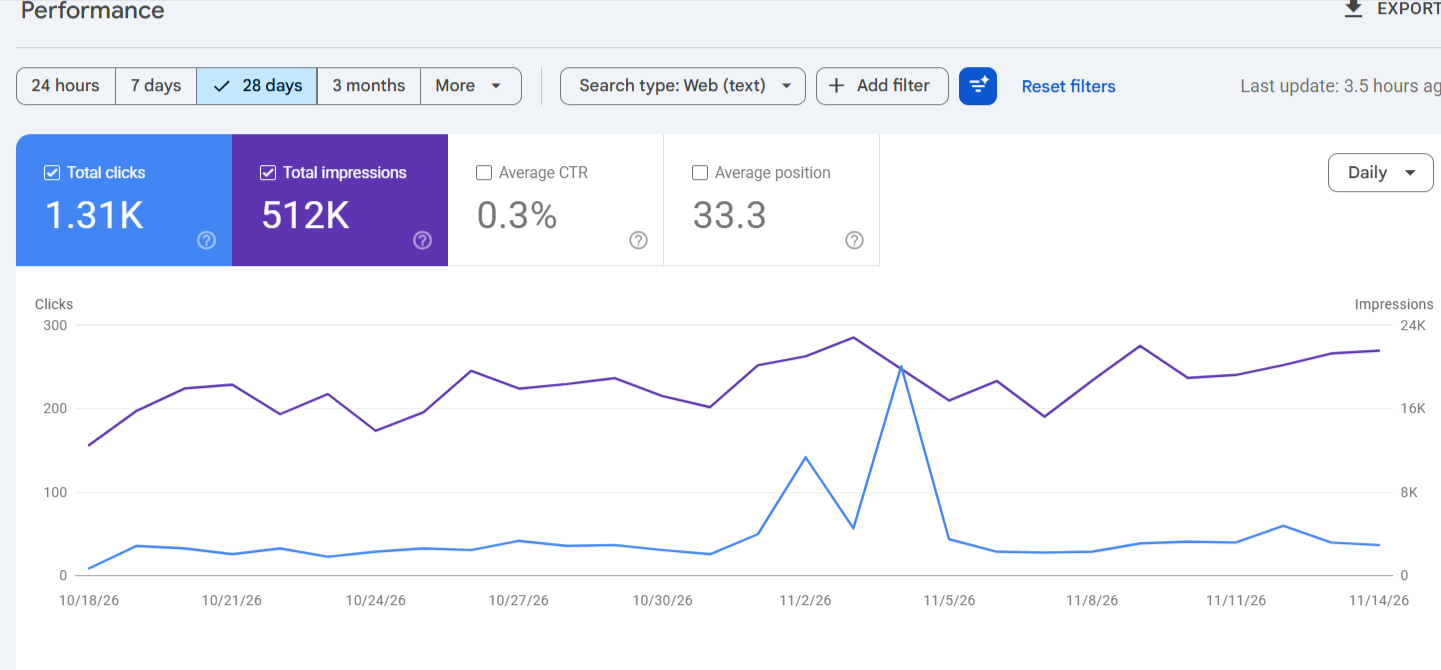
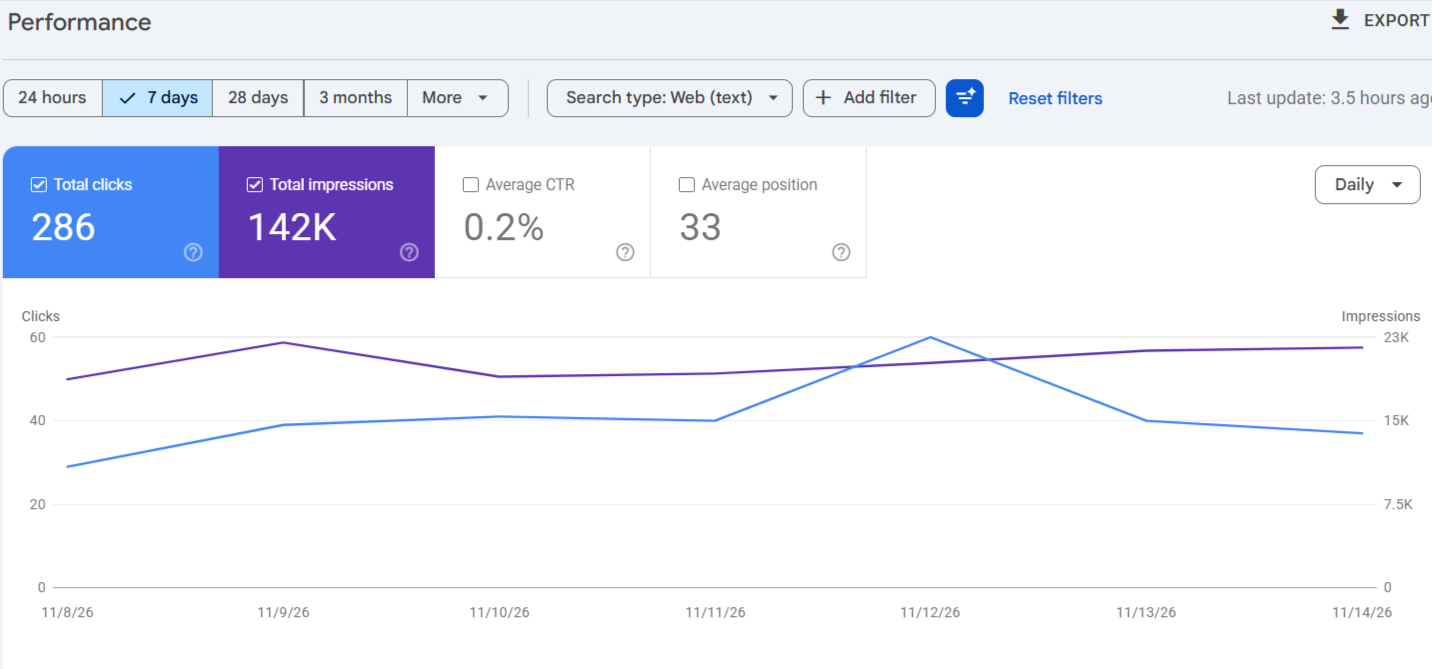
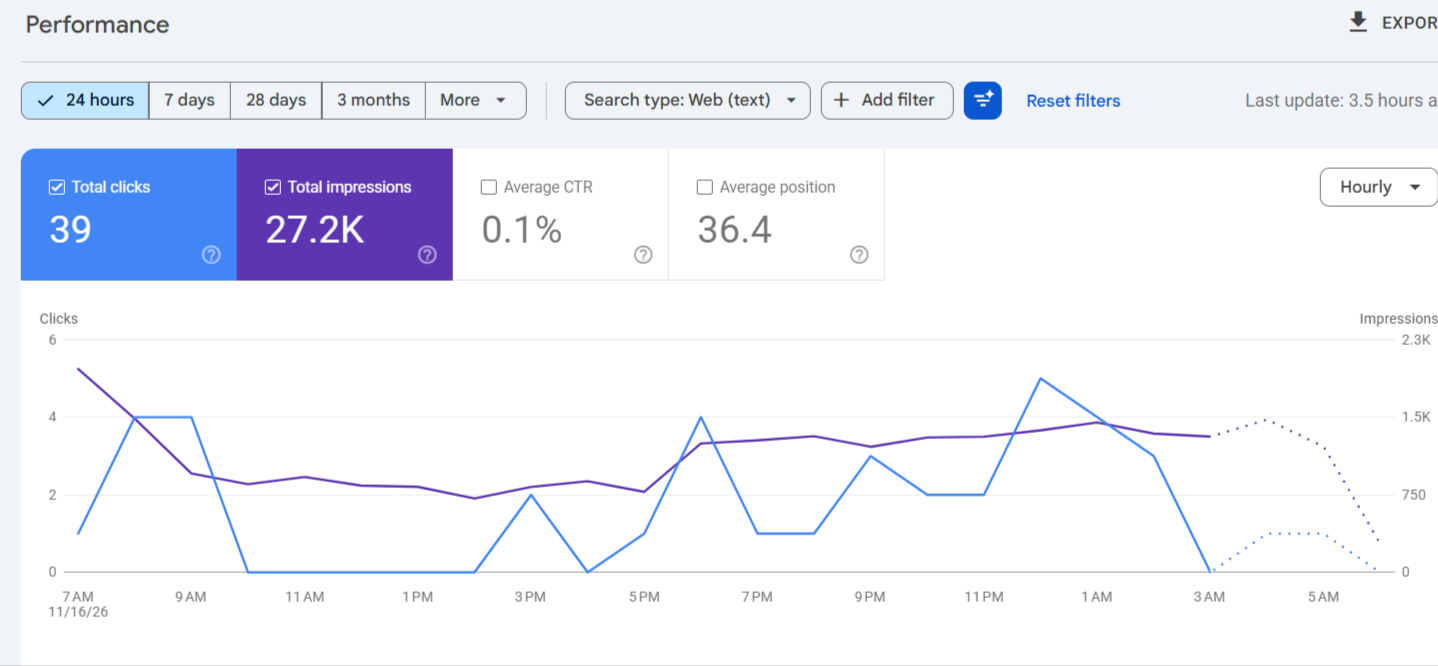
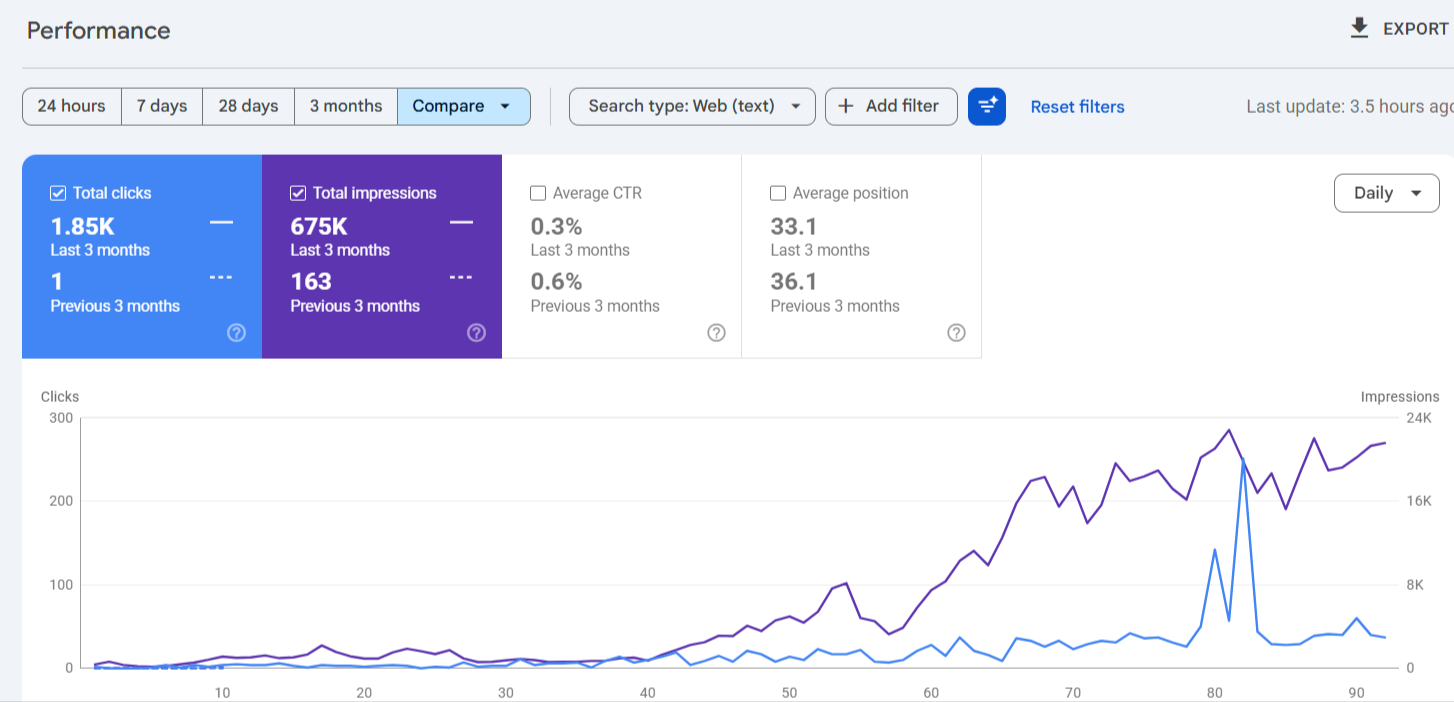
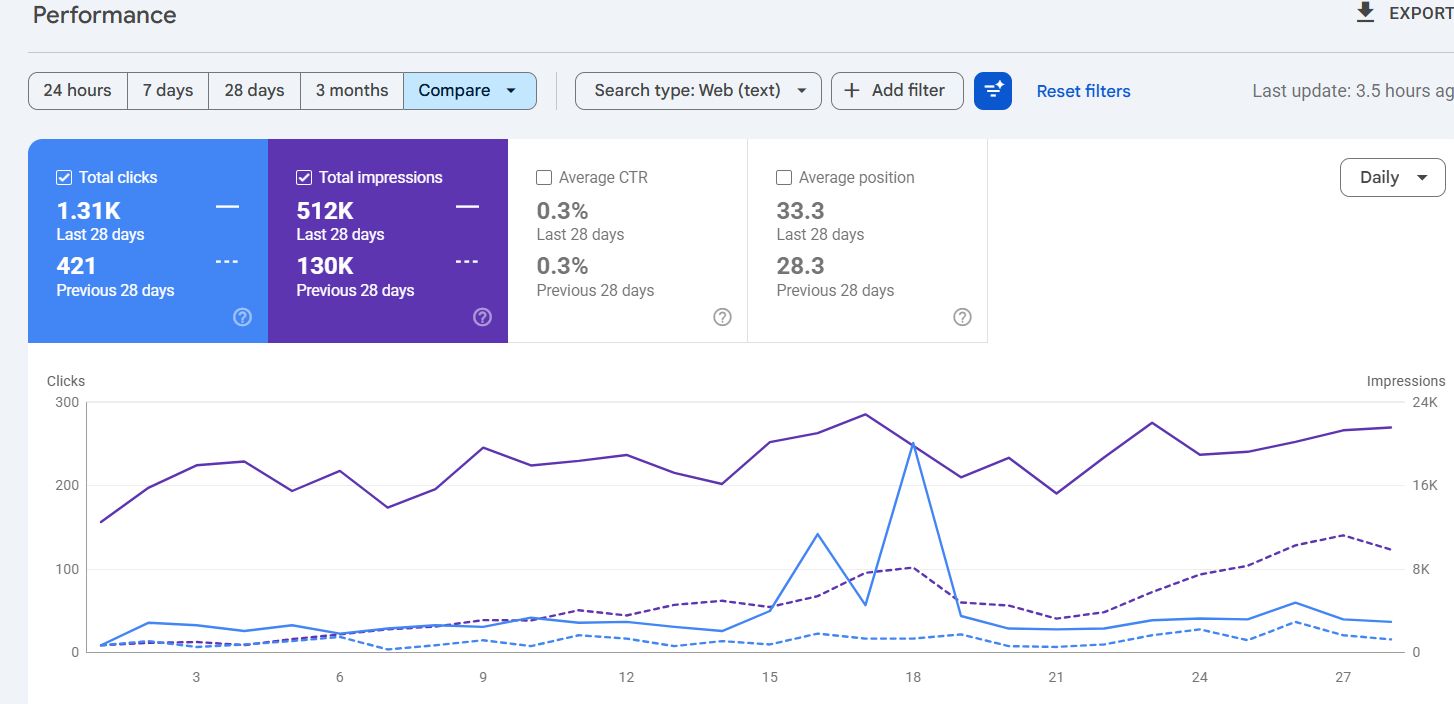
Results vary by business, market and starting point, and are not a guarantee of future performance.